Participation & policing
““Relax,” said the night man
”We are programmed to receive
You can check out any time you like
But you can never leave””
The thing about identity, about lived experience, is that you can’t opt out of it. We don’t get to stop being who we are, or decide not to experience what we experience. Describing the song Hotel California, Don Henley of the Eagles explained that it was about “the dark underbelly of the American dream”, suggesting that it portrays the slide from blissful ignorance into the complexities of ‘fame and fortune’. David L. Nevins reflects, in the Fulcrum, that the song’s dark coda feels apt given, “the politics of division and dysfunction that exists [...] today.”
We can’t opt out of identification. Each of us uses words to describe ourselves and to describe other people. Words around identity can be weaponised as tools of division or woven as threads of understanding. They can be sharpened into blades of dysfunction or distilled into hues that illuminate and provoke awe. Or they can simply function as the fabric of existence, neither dangerous nor scintillating.
As I write, I am travelling the seas to the West of Norway, returning from a visit to the Sami people - a people indigenous to Norway, Sweden and Russia - in snowy Narvik. Ronald, a Sami elder, spoke captivatingly about Sami identity. Ronald powerfully described the interweaving of individual diversity and communal respect, singing joiks - musical names or portraits of each individual human or non-human animal or aspect of nature. Joiks are like “painting a person with your voice”, Ronald explained, going on to argue that “When people sing together it creates energy”. I couldn’t agree more when, later that evening, I stared up at the dancing northern lights, singing my gratitude to the God who binds us all together.
In Ronald’s understanding of the world, respect for other people, other animals, and other aspects of nature is vital because we are all interconnected. I can no more disconnect myself from the seas on which I travel than you can disconnect yourself from the trees that transform the air you breathe.
As we slide into the underbelly of political binaries and manufactured culture wars, we can ‘check out anytime we like’ but we ‘can never leave’. We can choose to snip the threads that bind us together - either through indifference or ire - or we can discover the diverse beauty that is possible when we join together in recognition of our inherent connections.
Identity groups are increasingly torn apart by internal policing. We forget that we need each-other, and focus more on our differences than our similarities. Every tear is a tragic loss. Imagine the potential of every human being working together to weave a world of justice and joy.
Should we be fighting over access to already contested and narrowed spaces, or should we be working together for safer, broader, kinder spaces for all? Should we be policing the ways that people talk about themselves, or should we be working together for communal narratives of what it means to live life to the fullest? Should we be racing competitively to grasp the most prized opportunities for ourselves or dancing into a shared future of enough for all?
This week, I leave you with a prayer.
God, we are bound together, whether we like it or not.
As we search for awesome lights that are only visible in the beauty of darkness,
May we journey with our ancestors to stories of justice,
May we journey with our siblings to acts of generosity,
May we journey with our children to lives of authenticity.
As we stitch and sing each-other’s names into being,
May we listen more than we speak, reflect more than we oppose,
And may we always recognise our individuality and our connectedness.
In the name of God who is always Many, and always One,
Amen.
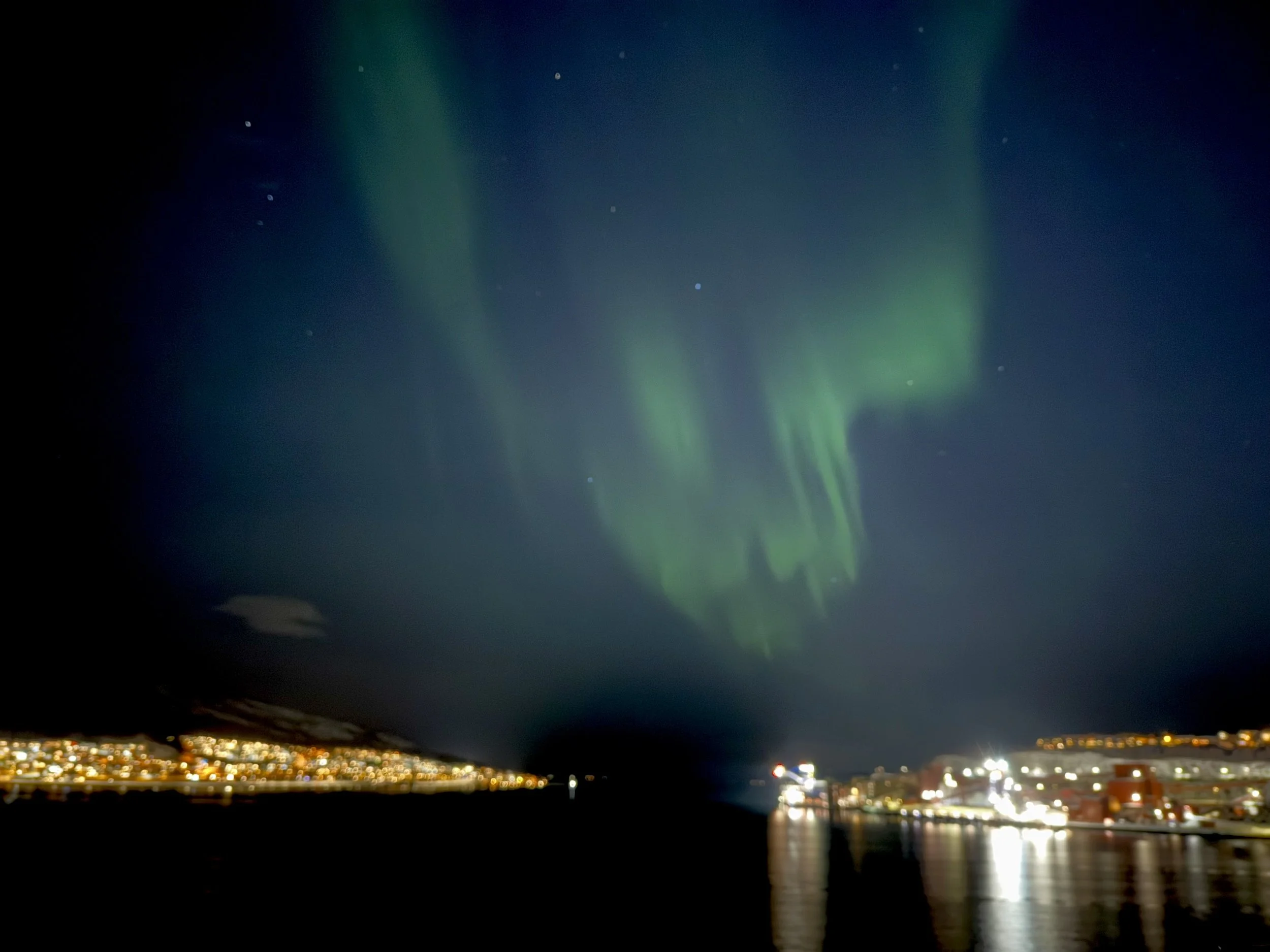
The northern lights from the port of Narvik.