Why Lived Experience Matters
“Open mind for a different view
And nothing else matters”
Metallica’s iconic ballad ‘Nothing Else Matters’, includes lots of lyrics which hint to the importance of lived experience. The irony is that the song’s composer, James Hetfield, was concerned about the vulnerability of such a song, suggesting that it was "a huge sign of weakness" for Metallica. He reflected, "You're in Metallica. This is hardcore. What the f-ck are you doing?" Despite this, Hetfield clearly understood the importance of bringing his experiences and understandings into his writing, explaining that "It's a true testament to honesty and exposing yourself."
The tightrope between reputation and vulnerability that Hetfield describes is one I know well. Writing and speaking out of lived experience often leads to both my family and myself being subjected to violence - metaphorical, existential, and actual - which makes me wobble around on that rope, tempted to turn back, or at least insist on a safety net. And yet, I am drawn back again and again to the vital importance of honesty, and that call insists that I continue to stitch my heart onto my sleeve.
Lived experience is rooted in standpoint theory: the idea that where you are coming from, where you are exploring a topic from, matters (read more about standpoint theory here). It’s important because, without lived experience, our knowledge gets stuck in false objectivity. In other words, we get stuck assuming that whatever the ‘average’ (or more often most privileged) person - the person with the pen, the keyboard, the doctorate, or agreement with the general consensus - experiences is true for everyone.
Those of us who are subaltern - who differ from the norm in any way - are often let down by research which fails to take our experiences seriously. We wouldn’t know about the disability wage gap without lived experience research conducted by and with disabled people. We wouldn’t know that incidents of people being challenged about their gender in public have markedly increased since April 2025 without lived experiences research conducted by and with trans people. And we wouldn’t know that disabled trans people are more likely to experience challenges than albed trans people if not for intersectional lived experience research.
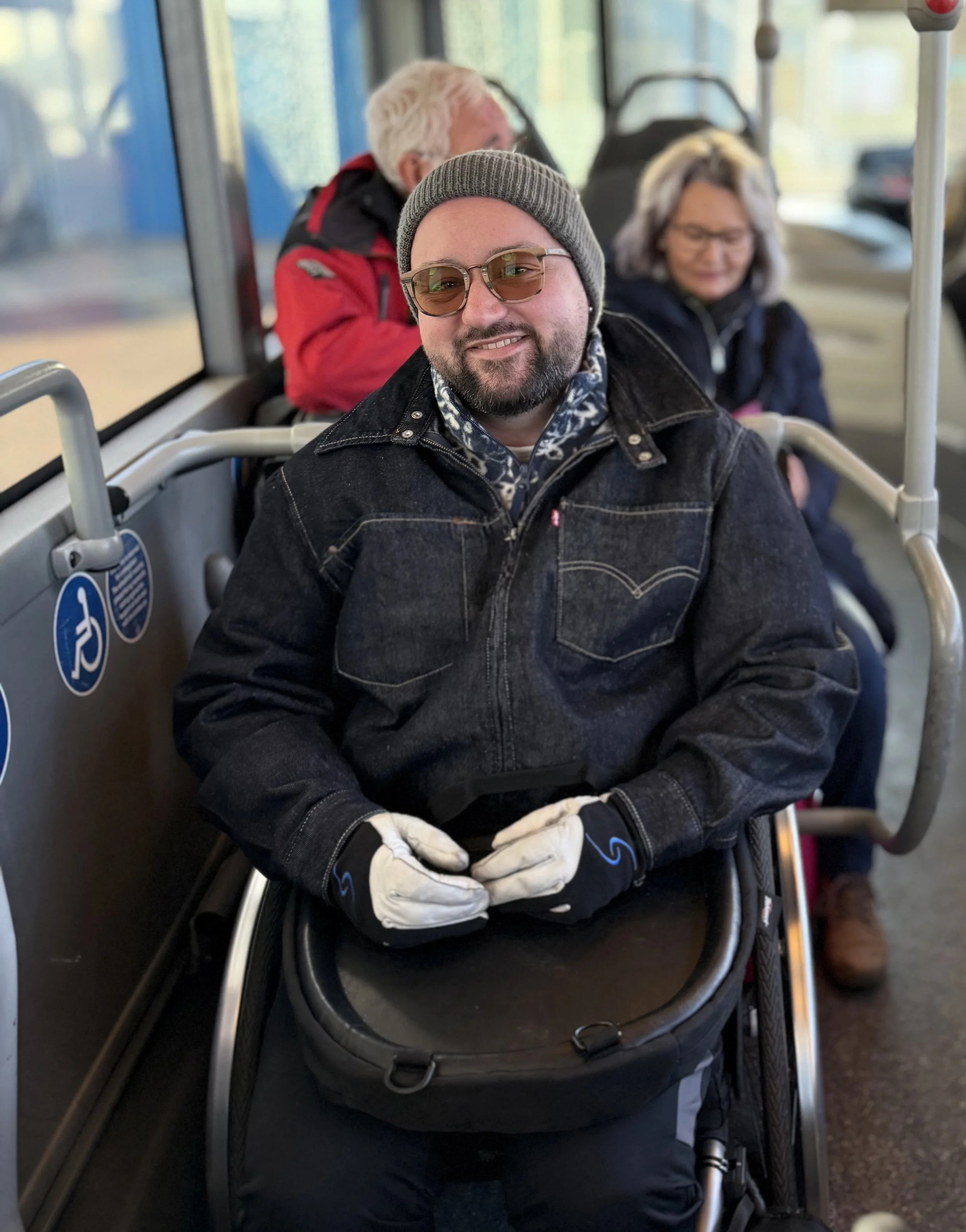
I write out of lived experience. My subaltern identity characteristics include being trans - having began my transition 15 years ago -, non-binary, disabled, neurodivergent and mentally unwell. My disability - EDS - means that I am pretty much a full time wheelchair user. I am autistic. I experience chronic depression and generalised anxiety.
I have power and privilege, too. I am white, and appear male - though this is tempered by being raised as female. I am able to access the support I need to move around an ableist world. I am happily married. I have a PhD, and a job I love. I have the time and means to engage in things I enjoy such as writing, music, and crafts.
When I write, I try to write out of my lived experiences of being subaltern, and to point to my power and privilege where relevant. This is my story, my thoughts, my questions.
As you read future articles, I invite you to bring to mind your identity. Do you hold subaltern identity characteristics, claimed or unclaimed? Where does your power and privilege sit? How does your identity - and/or the identities of those you care about - interact with what you are reading? Which of your lived experiences might lead you to relate to, or react against, what you are reading?
This is me. Who are you?